
Sabres Seats: Up Against the Glass or Above the Play?
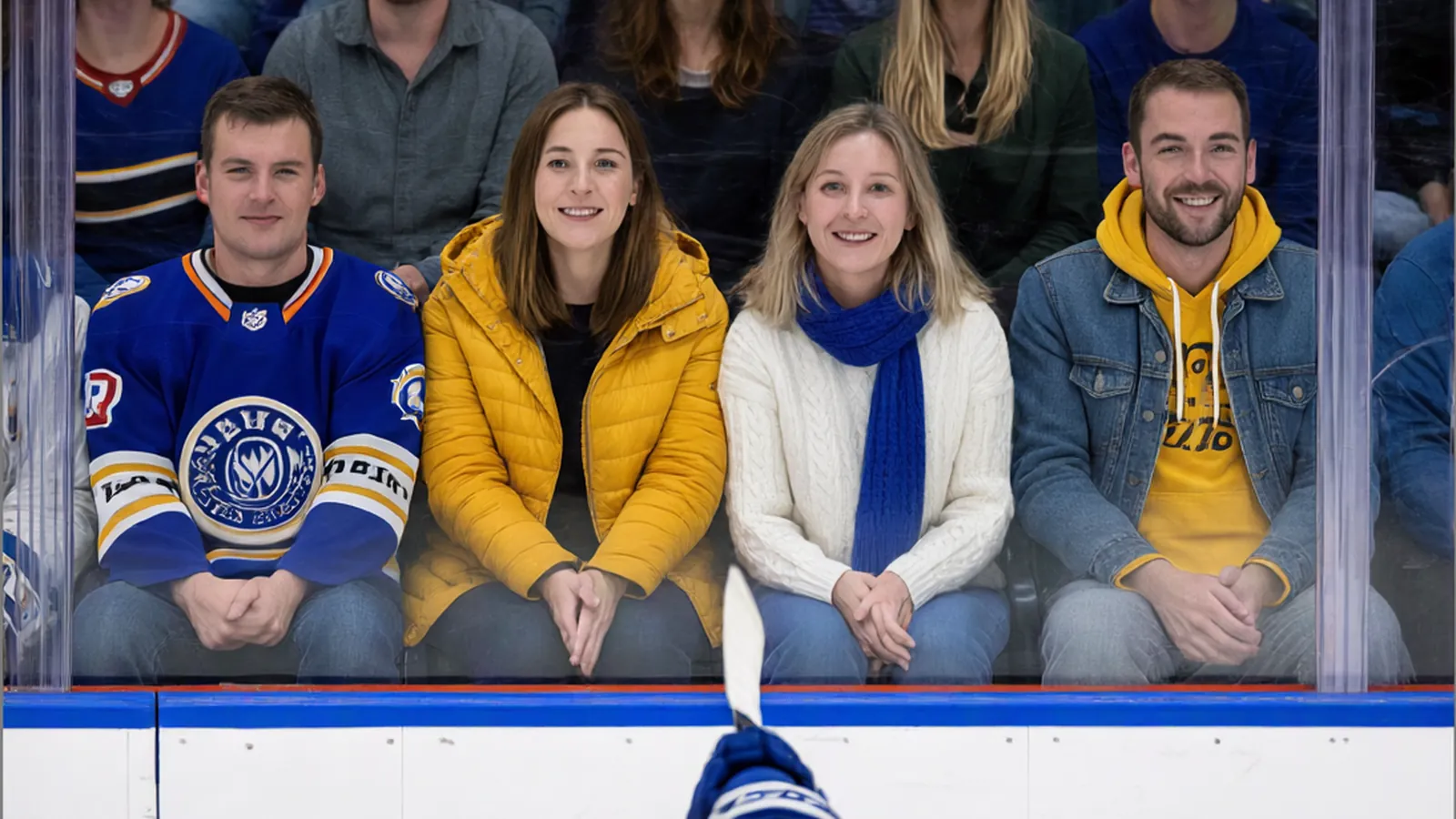
There are two ways to watch hockey, and they pull your money in opposite directions. One is up against the glass: the boards, the noise, a face an arm's length away when things heat up. The other is above the play: the full width of the ice, every shift visible, the game readable from forty feet up. Neither is wrong. The wrong move is picking one without knowing which kind of watcher you are, then discovering it three rows in. Compare Buffalo Sabres tickets at KeyBank Center with the tradeoff in front of you, and the section choices stop looking like a puzzle.
The two ways fans watch hockey
Be honest with yourself before you look at prices.
- The close-and-loud kind. You want the atmosphere: glass-side rows, the bench side, a fight you can feel. The game's texture is the point, and you trade away the whole picture to get it.
- The play-development kind. You want to see it happen: puck movement, defensive structure, the full rink in one glance. You trade away the roar for the geometry.
No section ranking resolves this, because it is a preference, not a fact. What a ranking can do is tell you what a zone generally trades, which is the only useful kind of ranking here.
Three vantage points in the arena
KeyBank Center's bowl runs from the Pavilion at field level up through the 100, 200 and 300 Levels, with escalators at each end of the Pavilion and express escalators from the 100 Level to the 300. That structure maps onto three honest perspectives.
- Low, near the glass (100 Level). Maximum proximity and noise. The tradeoffs are geometry, not quality: side angles stretch the rink, the benches can sit between you and part of the ice, glass reflections and corner sightlines vary by row, and netting can cut the view behind the goals. All of that is standard arena behavior, and the exact layout for any section is a question for the listing note and the arena's guides, not for this post.
- Elevated lower bowl (200 Level). The compromise row of the building: close enough to feel the game, high enough to read it. Center-side sections here are the classic "watch the whole play" zone, while the corners keep the angle problem.
- Upper level (300 Level). The full-rink view with the best price-to-view ratio in most arenas, and the quietest, least physical experience. The trade is distance: individual players become small, and you are watching structure, not sweat.
The arena's A-Z guide and game-day materials are where the verified details live, and the Sabres A-Z guide covers entrances, elevators, parking and services. This post gives you the framework; those documents give you the facts for your exact section.
The comparison, by the kind of buyer
| Your priority | Zone to look at | Likely tradeoff | What to confirm |
|---|---|---|---|
| First-timer who wants to feel it | 100 Level, center side | Price, and side angles off center | Section and row on the seat map, plus any view notes |
| Tactics watcher | 200 Level center, or 300 center | Distance from the boards | How the row sits to the rink center line |
| Buying for a group | Any zone with enough seats together | Quantity, not just view | Seats are together within the one listing, for your count |
The last row is the one groups miss. A stunning section that only has two of your four seats together is a worse purchase than a quiet upper section that has all four. Check the quantity inside the listing before the view, not after.
How to verify your exact seat
Four checks, in order, on the listing itself. First, the section and row, read off the seat map where available, because a section name is a zone, not a seat. Second, the quantity, and whether your seats sit together inside that one listing. Third, the notes, where restricted views and anything unusual get stated. Fourth, the delivery method, because the best seat on a ticket you cannot use is still a problem. If the note leaves you guessing, the arena's guest services line is 716-855-4100, and a two-minute call beats a two-hour argument. Know that in-seat service exists in the building, and that parking is available on a limited game-to-game basis in the KeyBank Center ramp and the LECOM Harborcenter lot, per the arena's own guides, so the evening can be as simple as the view you picked.
Questions fans ask
Can I follow the puck from the first row?
Part of it. Close rows give you speed and noise, but the ice is wide, and tracking a full possession from the boards means your head is always moving. That is the trade the close rows sell.
What changes behind the net?
Everything is angled. Behind-net sections watch through netting and across the ice at a steep angle. Some fans love it. Most first-timers do not know they are buying it, which is why the note matters.
Does a higher seat make the full rink easier to see?
Generally yes, up to a point. Elevation reduces the side-angle problem, and the upper level is where the whole sheet fits one glance. Distance is what you pay for it.
How do I verify my section?
On the seat map for the game, with the row, the quantity and the listing notes in front of you. When the note is unclear, the arena's guest services line is the fast answer.
Pick the watcher you actually are, verify the row and the quantity, and let the seat map settle it. Browse Sabres tickets for your game, scan NHL tickets for the rest of the season, and buy with confidence: every order on StubOrder is backed by our 100% Buyer Guarantee.
The numbers behind this: see live Buffalo Sabres ticket price data, updated hourly and free to cite, or go straight to Buffalo Sabres tickets and schedule.
